

My Postpartum Playbook
Everything I learned from delivering twins to recovering from a C-section - the fitness, nutrition, and tools that helped me rebuild my strength, plus answers to my most asked questions.

As I mentioned, this week The Weekly Assist takes a brief detour from sports analogies and motivation and instead, I’m sharing my postpartum recovery guide.
But for those of you who are not in need of such resources, I’ll leave you with one quote before we begin (thank you, Samara, for sharing this with me):
“It’s the repetition of affirmations that leads to belief. And once that belief becomes a deep conviction, things begin to happen.” ~Muhammad Ali
We’ll come back to Ali’s words later. But first, here’s what we have in front of us.
Purpose
The goal of this guide is to help new moms navigate the early, middle, and later stages of postpartum recovery.
Inside, I share my own experience and answer the questions I heard over and over again from our beautiful community of parents who Soto.
As I organized everything, I considered breaking this into a series of emails. But instead of cluttering your inbox with multiple posts, I decided to write one comprehensive doc. My hope is that you’ll save it, return to it whenever you need it, and use Ctrl + F to quickly find the section that’s most relevant to where you are.
Outline
Call me old-fashioned, but I love a Table of Contents. It’s the purest form of managing expectations. Here’s what’s ahead:
My Birth Story
Feeding Options (I love them all)
Soto Workout Plan (We are currently extending a free month to this audience)
Introducing our Advisor: Dr. Emily Oster
My Meal Plan
Favorite Tools
Most Asked Questions
Final Thoughts
Before we go any further, let me just say, I am so proud of you.
Look what you just did? You created life. You carried it. You brought it safely into this world. And now, as you recover from one of the most physically demanding experiences the body can endure, you’re pouring your heart into helping another human grow.
Extraordinary.
Motherhood asks women to become experts at putting themselves second. Almost overnight, everyone begins asking about the baby before they ask about you.
So, let me be the person who asks about you.
Let me prioritize your recovery. Let me support your strength. Let me remind you that caring for yourself is not separate from caring for your child, it is part of it.
I know you’re already putting your baby first.
For the next few pages, let me put you first.
Backstory
I have to say, so many of you are here because of Elizabeth Endres, and I am absurdly grateful for your readership. I always tell Elizabeth that the community surrounding her newsletter and podcast is one of the kindest on the internet, so it is truly an honor to have you here.
I share the full story of my pregnancy, birth, and postpartum recovery on The Wellness Process (Part I & Part II), but here’s the one-sentence version:
On January 17, 2025, I delivered healthy twins, Maya and Jack, via a scheduled C-section. During delivery and a second abdominal surgery, I hemorrhaged 3.5 liters of blood. In the days that followed, I developed a severe allergic reaction to an IV antibiotic that spread across my entire body. The medication required to treat the reaction ultimately dried up my milk supply.
What followed was a recovery that demanded patience, grace, commitment, and discipline. Some choices were made for me. Others were entirely within my control.
Everything you’ll read here is informed by three things: my own experience, evidence-based research, and the guidance of one of Soto’s trusted advisors, who specializes in women’s health.

Feeding Your Baby
Now, I realize I may be over-contextualizing what comes next.
Part of that is because, in the wake of the podcast being released, some women heard only one sentence: “I did not breastfeed.”
What followed was a flood of comments ranging from, “You are so selfish,” to, “What kind of mother does this to her child?” and, “How can you live with yourself?” Before long, the conversation had taken on a life of its own, with commenters debating one another as much as they were remarking on me.
As painful as those messages were to read, they reminded me that feeding a baby has somehow become a referendum on a woman’s character.
So let’s revisit that quote.
“It’s the repetition of affirmations that leads to belief. And once that belief becomes a deep conviction, things begin to happen.” ~Muhammad Ali
Choosing to breastfeed is incredible.
Choosing to pump is incredible.
Choosing to formula feed is incredible.
Choosing a combination of all three is incredible.
And if you never had the gift of choosing at all, you are every bit as incredible.
No matter how you feed your baby, you are an incredible mother.
Read those words again.
If you don’t quite believe them yet, borrow my belief until yours catches up. I’ll happily repeat them from my desk until you do.
My goal in writing this section stems from the question I receive more than any other though. Over the past year, more than 250 women have messaged me wondering why their postpartum weight hasn’t disappeared as quickly as they expected.
Many had been told some version of the same promise: Breastfeed, and the weight will simply fall off.
I never had the opportunity to test that theory myself, so I wanted to understand what the science actually says.
The answer is more nuanced.
Producing breast milk requires a tremendous amount of energy, roughly 400 to 700 calories each day. For some women, that increased energy demand supports weight loss. But it is not a guarantee.
Weight loss still depends on overall energy balance. Because, at the same time, breastfeeding often increases hunger, shifts hormone levels, and signals your body to conserve energy so it can continue producing milk. Those competing forces are why some women lose weight while breastfeeding, while others find it more difficult.
Because if your body has one priority, it will protect the resources needed to do that job. Sometimes that means holding on to fat, not because your body is working against you, but because it is working for your baby.
So if you’re breastfeeding and frustrated that your body doesn’t look the way you expected it would, please know this: your body is not failing you. It is doing exactly what biology designed it to do.
Finally, because I firmly believe every heavy conversation deserves at least one laugh...
After I fully accepted how everything unfolded on social media, I joked to my mom that if I ever filmed a commercial for a formula company, I’d probably have to end it by saying:
“And now... I am proactively entering the Witness Protection Program.”
Soto Workout Plan
As many of you know, I am the Founder of SotoMethod, a fitness company built to deliver results by prioritizing efficiency and approachability. Every program reflects a distinct season of life, where a different set of circumstances shaped the programming. Whether I was sitting behind a desk trying to build strength and stamina despite a sedentary lifestyle, pregnant with twins, or finding my way back to my body postpartum. The lineup below is exactly how I scaled my workouts post having my babies:
PostPartum Part I
This program supports you through the earliest weeks of postpartum recovery. We focus on two simple things: walking and breathing. During my own recovery, I did exactly that for eight weeks because, as my mom always says, “You only heal well, once”. I remember waiting for a treadmill behind beefy 23-year-old guys and wanting a shirt that read, “The treadmill is all I have right now.” You may feel ready to do more sooner than I did. But if you need to rebuild one step at a time (no pun intended), this is where I want you to start.
The Check-In
Once you’re cleared to exercise postpartum, this is the next step. I built The Check-In with pelvic health physical therapist Dr. Aimee Anagnostos to help you rebuild your foundation through breathwork, core work, glute activation, and mobility before progressing to more challenging workouts. We finish with a dedicated lesson on Diastasis Recti so you know what to look for and how to move forward with confidence. And if you’re in New York City, Soto members receive $125 off their first session at Myodetox with code SOTO125.
PostPartum Part II
I know, we take a VERY layered approach at Soto. But this third and final piece of the postpartum program is where we safely bring intensity back into the picture.
We begin with my conversation with Dr. Emily Oster on what the research actually says about postpartum recovery and returning to exercise. (Since filming it, we’ve had the privilege of becoming friends, and I couldn’t be more grateful that she has since joined Soto as an Advisor.)
From there, you’ll move into a four-week progression of Soto workouts that gradually build from a 15-minute Sculpt class in Week 1 to a 30-minute Sweat class in Week 4.
30-35 Min Sculpt, Strength & 1-Cardio Sweats
Now, every new mom takes a slightly different path. For the next month, mine centered around three types of training. Three to four times each week, I rotated between 30 to 35 minutes of Sculpt, Strength, and a 1-Cardio Sweat. Each served a different purpose: Sculpt rebuilt mobility and muscle memory. Strength progressively increased load tolerance and muscular strength. And 1-Cardio Sweats rebuilt my aerobic capacity and helped me rediscover my stamina.
5 Minutes
However, there were days, and even weeks, when, between work and 2:00 a.m. wake-ups, those 30 minutes simply didn’t happen. We push through tired, never exhausted.
So on those days, when energy was low and time was limited, my goal became five minutes.
Those very five minutes became the momentum driver. They kept the thread of discipline intact, even in the face of new motherhood. My favorite hacks? A 5-minute Arm Sculpt while the bottles warmed. Five minutes of bridges before hopping in the shower.
(Link here for one-free month the app!)
Now the journey is yours. A few places I’d point you next:
The Weekly Assist: Our Monday-through-Sunday training plan lands every Sunday night, so it’s waiting for you Monday morning. Every week brings a fresh mix of Sweats, Sculpts, and Strength classes in a variety of lengths.
Partner Series: This one is fabulous. Great workouts, plenty of banter, and you can do the whole thing in your pajamas. As one of my friends would say, “Shut up. You had me at pjs.”
Transformation IX: If you’re ready to commit to a structured plan and turn the intensity up another notch, this is where I’d go. Sometimes the right plan is all it takes to make the hard thing feel a little easier.
SotoSummer: Call it recency bias, but I absolutely love this program. It’s fresh, scalable, and full of variety. And if you’re nesting or simply don’t feel like leaving the house, we’ll bring the pool to you.
Our Advisor: Dr. Emily Oster
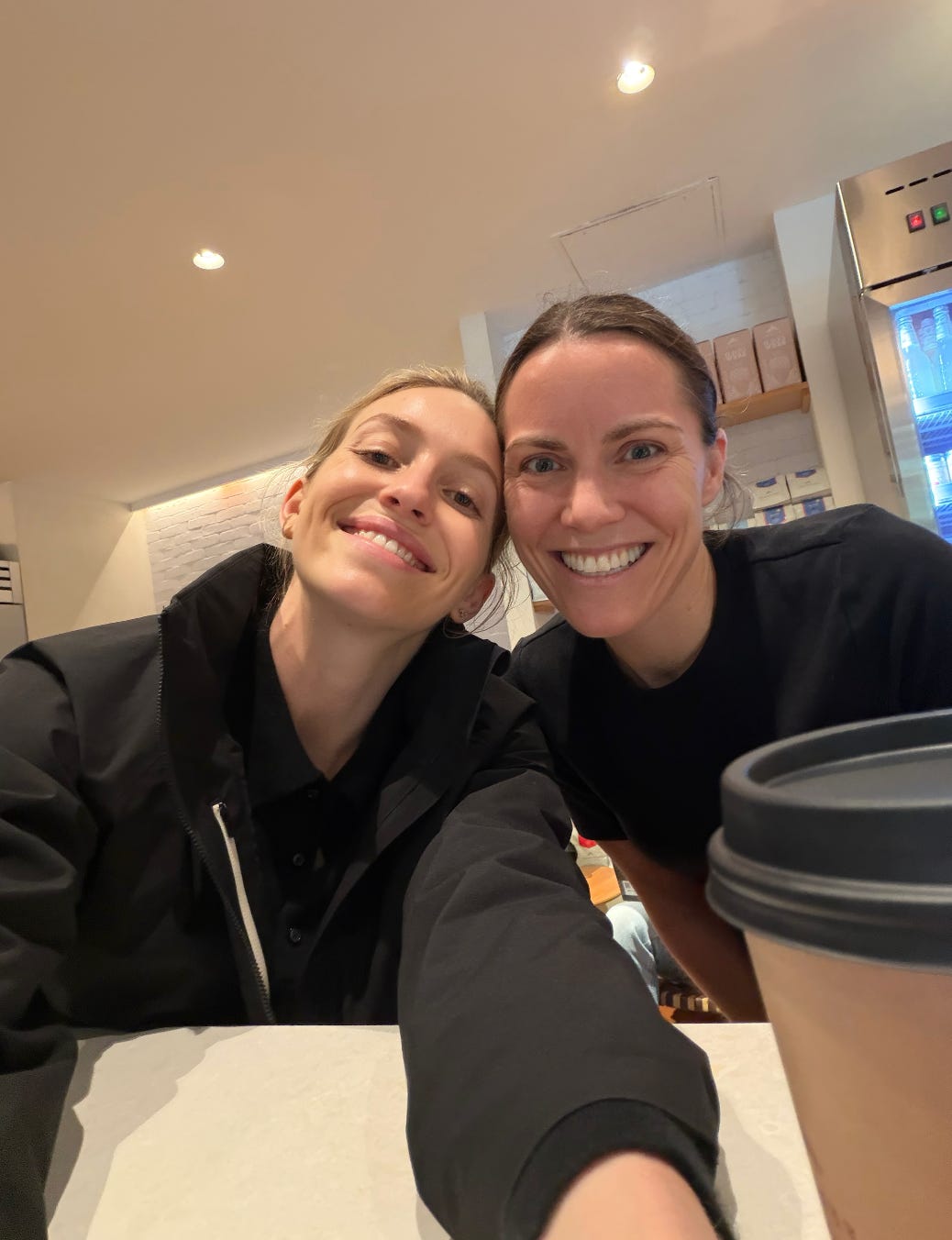
I touched on this briefly in the last section, but I can’t overstate how grateful I am to have Dr. Emily Oster as an Advisor to Soto, author to one of my favorite books “Expecting Better” and the founder of ParentData.
Throughout my pregnancy and postpartum recovery, I turned to Emily more than anyone else. Not because she tells women what to do, but because she believes women are capable of deciding for themselves. She presents the evidence with rigor, leaves room for nuance, and trusts women with their own agency.
That philosophy aligns perfectly with everything we believe at Soto. And whenever I have a question, she’s still one of the first people I call.
My Meal Plan
If Substack created a year-end “Wrapped” for vocabulary, I know exactly which word would top the list:
Nuance.
Because once again, that’s the story here.
Diet is deeply personal. Allergies, intolerances, preferences, glucose response, culture, budget, schedule, and countless other variables shape how each of us eats. My goal isn’t to tell you what you should do. It’s only to share what worked for me. (You know me, I over-disclose, so I just need to say it: I am not a nutritionist. Next week, I’ll send across a list of women though who I love and trust in this space.)
For the first eight weeks, my guiding word was nourishment.
There was no “diet”.
One of my closest friends, Courtney, gave me the best advice: Do whatever you need to do to feel warm and cozy.
After carrying twins, eating without heartburn felt like a luxury. I enjoyed food. My only rule: I stopped eating when I felt full. That was enough. I found that leaving the table comfortably full helped me drink more water, sleep better, and maintain more consistent energy throughout the day.
During months three and four, my guiding word became mindfulness.
I didn’t count calories or set any structure. Instead, I asked myself simple questions. Did I eat enough protein? Did I include a vegetable? Did I drink enough water? I was rebuilding habits.
Then came month five.
For me, mindfulness alone wasn’t enough to lose the final pounds.
**Pregnant pause** (I feel only women have earned the right to use that phrase.)
There is no deadline for returning to your pre-pregnancy body. You are recovering from delivery while carrying responsibilities most people will never fully appreciate.
For me, month five marked a shift.
The frustration had peaked. I still was at a weight where I didn’t feel myself, and I felt ready to direct my discipline somewhere for myself.
My circumstances also mattered. Because I was no longer producing breast milk, I could reduce my calories without worrying about compromising my milk supply. That is why the previous section matters. Different circumstances require different decisions.
So I committed to thirty days of always making the healthy choice.
For thirty days, this was the plan.
Before Breakfast
8 oz. water with Alkalize by Sarah Wragge Wellness. This became my favorite habit of the day. Before I checked my phone or made another decision, I had already done something good for myself. Greens, hydration...and yes, a poop.
Hot oat milk latte.
Breakfast Options
Two fried eggs with half an avocado.
Half an avocado on Ezekiel toast with Brightland olive oil and salt.
Omelet with turkey and spinach.
Lunch Options
Turkey sandwich on Ezekiel bread with spinach & mayo. Side of baby carrots & grapes.
Spinach salad with tunafish.
Sweetgreen Order: spinach, kale, double roasted chicken, avocado, carrots, tomatoes, cucumbers, medium Caesar.
Smoothie at home: Táche pistachio milk, peanut butter, spinach, kale, banana, Sarah Wragge Wellness chocolate protein.
Juice Generation: PB Split with kale and spinach.
Dinner Options
Chicken, spinach salad, and a side of Jovial pasta.
Steak, roasted potatoes, and broccoli (courtesy of my husband).
Breakfast for dinner: two fried eggs, avocado, and Ezekiel toast.
Roasted salmon, wild rice, and a vegetable.
If we went out to dinner, I looked for a protein and vegetable option.
Dessert
Tea became my signal that the day was over. Our holy grail, Steven Smith Teamaker. Just wow. In peppermint specifically. Once the twins went down, Rob and I would each pour a cup and spend ten minutes together. Sometimes we talked. Sometimes we snuggled. Sometimes, we just sat there, in silence.
A few squares of dark chocolate usually found their way into the evening too. A few favorites: Hu Chocolate, Alter Eco, & Chocolove Rich 65%.
Snack Options
Fruit and vegetables were always fair game: apples, oranges, pears, grapes, watermelon, and carrots.
When I got busy and suddenly found myself starving, I reached for a Sakara Metabolism Bar, an Aloha Bar, or a Promix Bar. The hardest part of eating well was making sure I never felt ravenous. Bars helped me bridge that gap.
Oh…you are damn right this is boring.
But I’d be lying if I told you otherwise.
I don’t crave endless variety. I crave food that tastes good, makes me feel good, and removes unnecessary decisions from my day. The hardest things to cut were the three C’s: chips, crackers, and cookies.
This approach, paired with Soto, helped me lose the weight that initially didn’t budge. Once I felt good again, I added more bread, regular pasta, and yes, chips back into my life.
So much of this chapter comes down to one word: momentum. Once you start feeling better, making the next good decision becomes a little easier than the last.
One final thought. If your body truly feels like it’s isn’t responding despite consistent nutrition, movement, sleep, and stress management, don’t assume it’s a willpower problem. Get bloodwork.
A comprehensive workup can uncover issues that make weight loss more difficult, including thyroid dysfunction (especially postpartum thyroiditis), iron deficiency, low vitamin D, insulin resistance or prediabetes, elevated cholesterol and triglycerides, vitamin B12 deficiency, and, in some cases, hormonal changes that warrant further evaluation.
For anyone in New York City, I can’t recommend The Lanby highly enough. They also have a phenomenal postpartum guide linked here.
Key Takeaway
“You gotta like the process or else it is too hard if you don’t.” ~Gary Vaynerchuk
The goal in all of this is to find a plan that makes the hard thing just a little easier. Between Soto and this meal plan approach, I felt supported and encouraged enough to stay consistent long enough to see real, lasting results.
Tools
Here are a few of my favorite postpartum essentials (many of which I still use today). In the interest of brevity, I’ll keep each recommendation short & all linked here:
SWW Alkalize Detoxifying Greens Powder: If you add one thing to your routine, let it be this. It changed my ability to commit to healthy eating because the first decision I made every morning was a good one. More energy, better #2s, and I still take it every single day.
SWW Protein Powder: My current favorite protein powder. It tastes delicious, causes zero bloat, and if you’re a hot beverage person, it doubles as an excellent hot chocolate.
Bumpsuit Bellyband: I wore this every day for the first two months (and well into the third). From the moment I woke up until I went to bed, it stabilized my core when it felt like jelly, helped reduce swelling, and I genuinely believe it accelerated my C-section recovery.
Nutribullet Pro: The biggest inconvenience of making smoothies at home is the cleanup. This solves that problem entirely. I’m obsessed with mine.
My Pediatrician Friend: Every new parent needs this. Yes, you can text your pediatrician. Yes, you can text your friends who are doctors. But having three of the best pediatricians on speed dial for rashes, fevers, and the inevitable “Is this normal?” moments brought me an incredible amount of peace of mind. (The team was kind enough to extend a code HILARY for 15% off.)
Shapewear: Attending a wedding freshly postpartum is a special kind of hell. Shapewear genuinely helped me feel like myself again when my confidence hadn’t quite caught up. I’m a Spanx loyalist. I wanted Skims to work, but the...let’s just say the cooch area was aggressively undersized.
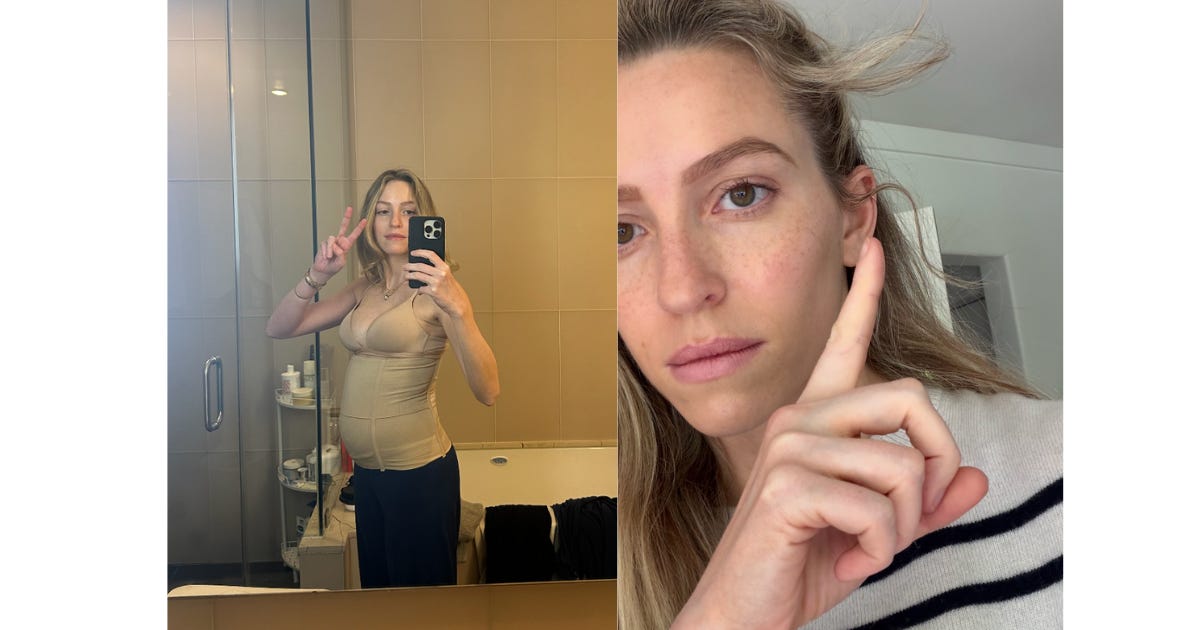
WeNatal: As the saying goes, “Red Bull gives you wings.” But so does WeNatal...and in this case, that’s a very good thing. This was my prenatal before pregnancy and it remains my daily vitamin today. I genuinely credit it with my postpartum hair growth. Wings pictured below.
Most Asked Questions
What are your opinions on GLP-1s to lose weight during postpartum?
I’ll start with a story: When I went off birth control in 2022, about six months later, I developed severe cystic acne across my jaw. I tried everything to fix it naturally…nutrition, supplements, acupuncture, you name it. Nothing worked.
Eventually, after I had the babies, I started spironolactone. It completely changed my skin.
I share that because it shaped the way I think about medication in general. I don’t believe there’s extra credit for making yourself suffer.
I personally chose not to take a GLP-1 postpartum, but I also don’t think there’s a prize for avoiding one if you’ve built healthy habits, explored your options, and, together with your doctor, decide it’s the right tool for you.
As with any medication, this is a conversation between you and your physician. They know your medical history, your goals, and whether it’s appropriate for your stage of postpartum recovery.
Modern medicine exists to help people. Sometimes the right answer is changing your habits. Sometimes it’s adding another tool.
How can I help my c-section scar and pooch?
First: Time. I know that’s frustrating to hear, but your body is rebuilding from the inside out.
The four things that made the biggest difference for me were:
First, my OB recommended BIOCORNEUM SPF 30 scar gel. It is expensive, and every time I reordered it I winced a little. But it worked, and I’d buy it again tomorrow.
Second, the Bumpsuit Belly Band I mentioned earlier. I wore it every day during those first few months because it gave my core the support it desperately needed while everything was finding its way back.
Third, scar massage. Once my doctor cleared me, I spent a few minutes every night gently massaging the incision to help mobilize the tissue and prevent excessive adhesions from forming.
And finally, rebuilding my lower core.
One thing I wish more women knew is that the postpartum “pooch” is not always a body-fat issue. Your abdominal wall, connective tissue, breathing mechanics, and deep core muscles have all changed dramatically over the course of pregnancy.
I prioritized breathing, deep core activation, and progressively loading my core back to strength. Some of my favorite foundational movements were diaphragmatic breathing, heel slides, bridges, dead bugs, and marching variations. Every one of these is included in our Postpartum Programs on Soto, where we gradually progress them over time.
How to navigate running postpartum
Running was one of the last things I added back. I rebuilt my core, strength, and aerobic capacity first, then gradually reintroduced impact before worrying about pace or distance.
I’ll also be revisiting this topic soon with Dr. Emily Oster. Not only is she an expert in pregnancy and postpartum research, she’s an avid runner herself, and I think her perspective on returning to running after having a baby will be incredibly valuable.
How do you rebuild yourself physically and emotionally while navigating the identity shift and anxiety that can come with becoming a parent?
I had terrible baby blues. During that period, an hour felt like an entire day.
I experienced intense cognitive dissonance. I felt overwhelming gratitude and pride for bringing two little lives into the world, while simultaneously looking in the mirror and barely recognizing myself.
As someone who naturally sees the glass half full, what frustrated me most was my inability to simply feel happy.
Eventually, I realized I had to stop fighting the sadness. The more I let myself feel it (without apologizing for it) the more it began to loosen its grip.
The same reframing helped when I found myself grieving parts of my old life. Instead of viewing that as a sign I wasn’t embracing motherhood, I chose to see it differently. Missing my friends, my work, and pieces of my former was proof those parts of me still mattered. They hadn’t disappeared. They were simply waiting for me to find my way back to them. I dive much deeper into the emotional complexity of early motherhood in the piece linked here.
How to keep going when getting pregnant is so hard
Thank you for such a raw and real question. As someone who struggled to conceive, I promised myself I would never forget what it felt like when it felt dark, because what I want to share with you, more than anything, is hope and belief. I share more on this theme in this piece (and I am sending you all my love).
Obbyn Recs in NYC
If you’re in New York and expecting twins, I cannot recommend Dr. Nerissa Guballa highly enough.
She cared for me throughout my twin pregnancy, saved my life and I trust her completely.
How did I manage getting babies on a schedule?
First, a disclaimer: I am not a sleep expert.
I am simply a twin mom who understood that without some structure, we would have been awake at every hour of the day and night.
Once we were through the true newborn phase, we committed to a schedule.
Feeds happened at 7 a.m., 11 a.m., 3 p.m., 7 p.m., 11 p.m., and 3 a.m.
Once the babies were ready to sleep through the night, the overnight feeds disappeared and our days settled into feeds at 7 a.m., 11 a.m., 3 p.m., and 7 p.m., with naps from roughly 9-11 a.m. and 1-3 p.m and asleep from 7pm-7am.
I kid you not, and I know after I type this I will jinx myself, but they sleep through the night 98% of the time. There is so much more to discuss on this, but will end here.
Struggling so much PP. I feel like I have no motivation to work out.
1. I am here for you
2. I feel this in my bones
3. As a quote enthusiast, here are words I come back to when I need a little spark
To inspire discipline: “I try to live to a standard, not the circumstances of the day. Some days it is easy. Some days it is hard. But I do it either way because that’s who I want to be, not because it is always easy to do.” ~James Clear
The importance of feeling it all: “Empathy is not the opposite of Stoic strength, it’s part of what keeps that strength from becoming coldness.” ~Ryan Holiday
When you feel judged: “As Maya Angelou famously advised, when people tell you who they are, believe them. Just as important, however, when people try to tell you who you are, don’t believe them. You are the only custodian of your own integrity, and the assumptions made by those that misunderstand who you are and what you stand for reveal a great deal about them and absolutely nothing about you.” ~Maria Popova
On the importance of a plan: “The beauty of routine is that you don’t waste your day in negotiation.” ~Dylan O’Sullivan
The goal: “We are not trying to repeat an outcome. We are trying to repeat a process.” ~Sam Presti
On the reality of doing hard things: “If you don’t fail, you’re not even trying.” ~Denzel Washington
On setting yourself up for success: “Before you try to increase your willpower, try to decrease the friction in your environment.” ~James Clear
On agency: “You can’t go back and change the beginning, but you can start where you are and change the ending.” ~ C.S. Lewis
Final Thoughts
We made it. Last section. Hallelujah.
By no means is this the end of the conversation on postpartum. I know you’re busy raising a little one, so I had to wrap it up.
But please know, as new questions arise, I’m always here. I’ll share my experience, lean on the research, and point you to experts like Dr. Emily Oster whenever the answer is, as we now know, nuanced.
But let me leave you with one final thought.
The hardest thing about the fourth trimester is that there’s no defined timeline.
Pregnancy comes with a due date. Recovery doesn’t. The ambiguity magnifies every uncomfortable emotion.
But remember what you’ve already done:
Trying to conceive was hard.
The first trimester was hard.
Working while pregnant was hard.
Parenting while pregnant was hard.
Giving birth was hard.
And…you did all of it.
One day, another mom will probably smile and tell you, “Don’t worry. You’ll get amnesia from it all.”
I hope you don’t.
Because your history matters. Every hard thing you’ve overcome becomes evidence that you can overcome the next one. Confidence isn’t built by forgetting what was hard. It’s built by remembering that it was...and doing it anyway.
Oh...and one last thing.
You are an incredible mother.

This will help so many women. Thank you, Hilary ❤️
So good.